Your family
thinks you
have a plan.
Do you? Not the case of water in the garage and “we’d head to your brother’s” — an actual plan. One built around your people, your house, the medications on the counter, the dog, and the one road out of your neighborhood. Crisis Planner asks the questions you haven’t, builds that plan with you over a weekend, and prints it so it still works when nothing else does.
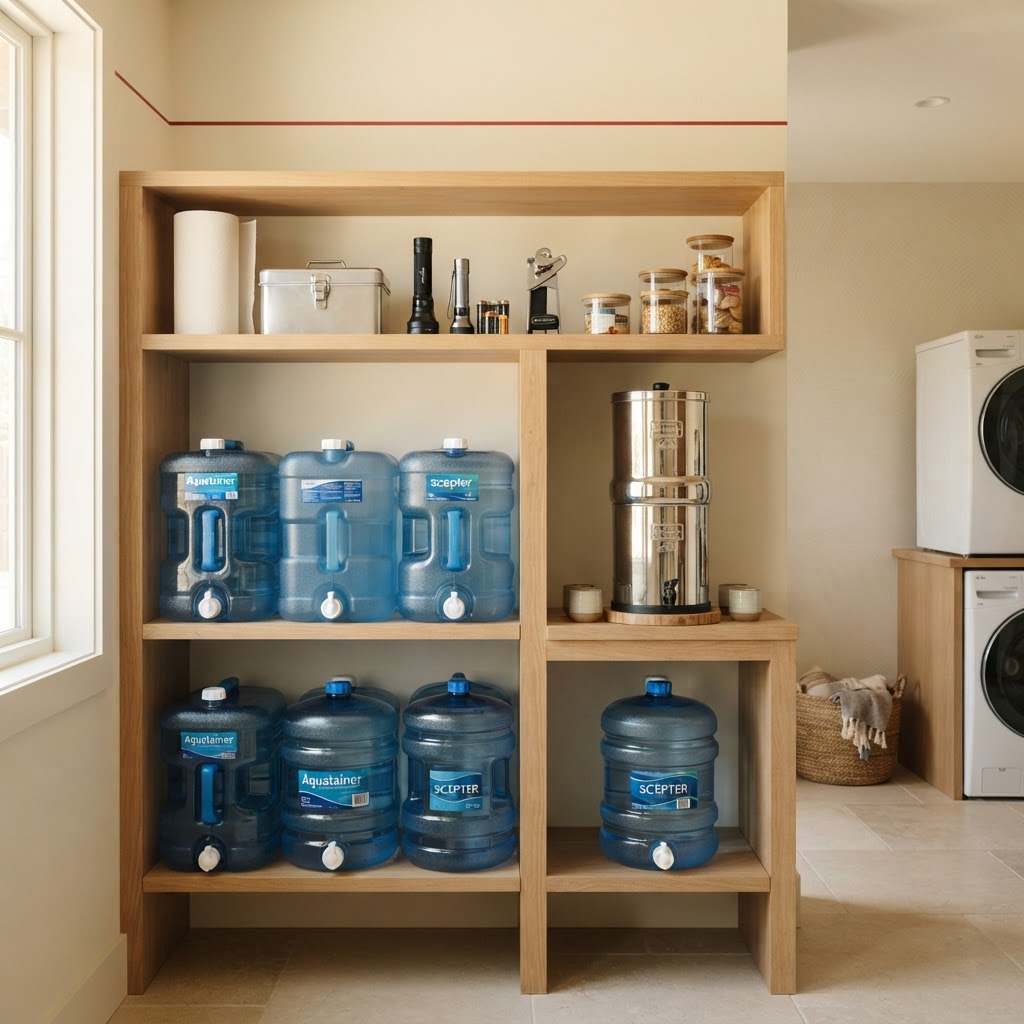
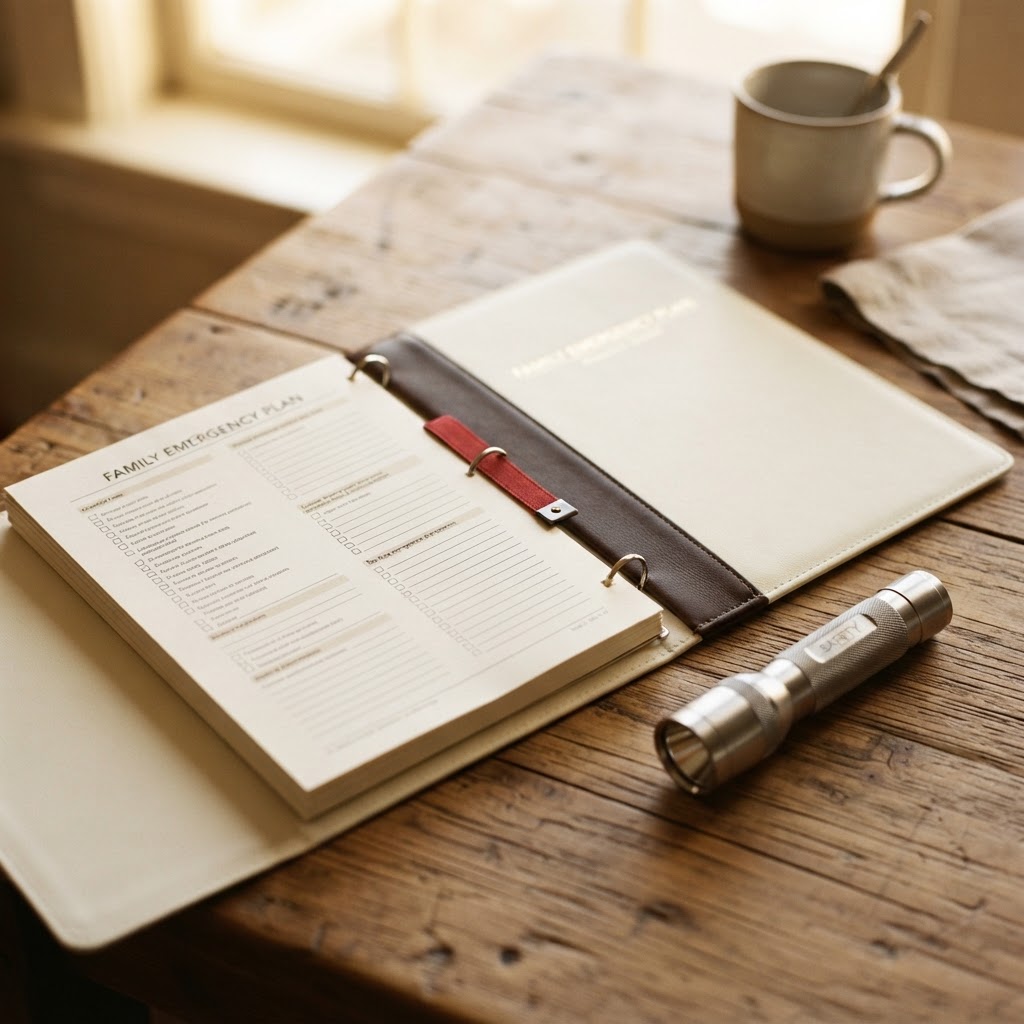

You don’t have a plan. You have a pile of stuff and a feeling.
Most of us are in the same spot. A case of water in the garage from three summers ago. A first-aid kit somewhere. A generator you’ve started twice. And an unspoken plan that goes roughly: stay calm, figure it out, drive to family if it gets bad.
That works right up until the night it has to. The ice storm that takes the grid down for six days in February. The boil-water notice that lasts two weeks. The wildfire text at 2 a.m. that gives you fifteen minutes. The question was never whether you’re capable — you are. It’s whether, in that moment, your family is running a plan or improvising one while everyone looks at you.
Crisis Planner exists to close that gap for one household: yours. Not a checklist written for an average family that doesn’t exist — a plan built around your people, your house, your medications, your pets, your region, and the single road out of your neighborhood.
The situations it plans you for
Power outage
The fridge, the furnace fan, the sump pump, the phones. What stops, in what order, and how long your backups really last.
Extended grid-down
A week or a month with nothing coming back on. Water, heat, food, fuel, and communications, planned end to end.
Winter storm
Keeping one room warm, running the generator without poisoning anyone, and sheltering in place through real cold.
Wildfire
Fifteen minutes’ notice. Who grabs what, who takes which vehicle, where you’re going, and which route is already blocked.
Forced evacuation
Leaving fast for any reason. Destinations, routes, loading roles, and a household that moves in minutes instead of arguing.
Pandemic / quarantine
Thirty days without a grocery run. Supply buffers, medication continuity, and keeping the house running while isolated.
Civil unrest
When services degrade and the streets aren’t safe. Movement decisions, home security, and keeping the family together.
Supply chain shortages
Empty shelves for weeks. Food, medication, and everyday consumables sized to your household, not an average one.
How it works, start to finish
Answer questions about your actual household
Who lives there. Who takes what. Who can’t walk far. What heats the house, where the water comes from, what’s in the garage. Plain language, no jargon, built to be done in an evening.
See exactly where you stand
Fifteen parts of your household, each scored against your answers, with the specific gaps ranked. You find out what to fix first instead of buying more stuff.
Run the crisis you’re actually worried about
Pick a scenario and how long it lasts: a 72-hour outage, a 30-day grid-down, a wildfire evacuation. Watch what fails first, when, and whether your family should stay or go.
Print it and put it on the shelf
Everything compiles into a binder with roles, routes, contacts, and medication lists. One at home, one in the truck. It works with the power off.
Fifteen parts of your household. Each one planned, each one scored.
Preparedness isn’t one thing. It’s fifteen — and most families have thought hard about two of them. Crisis Planner walks you through all fifteen, builds each one around your specifics, and tells you plainly where you stand and what to fix first.
Water
How many gallons your household really needs, per person and per pet, and where the next gallon comes from when the tap stops.
Food
Storage targets built around what your family will actually eat, any restrictions, and how many days you can cover.
Cooking
What you’ll cook on when the power is out, and whether your stored food matches that method.
Medical
Every prescription, device, and allergy per person, with days-of-supply counted and a plan for when the pharmacy is closed.
Hygiene & Sanitation
The toilet question nobody wants to think about, hygiene reserves, and waste handling when the water’s off.
Shelter & Warmth
How long your home stays livable without power, which room you consolidate into, and your backup heat and cooling.
Power & Energy
What actually needs to stay on, real generator runtime against the fuel you have, and what fails first.
Communications
Reaching each other and getting real information when cell networks are down or jammed.
Evacuation
Destinations, primary and backup routes, who loads what, go-bags, and how the kids get picked up.
Vehicle Readiness
Fuel, seats versus people, winter kit, and whether every vehicle can actually do the job you’re counting on.
Documents & Cash
Cash on hand in denominations that work, and every critical document located and ready to grab in fifteen minutes.
Family Coordination
Meeting points, an out-of-area relay contact, and who does what when the phones don’t connect.
Home Security & Hardening
Entry points, a blackout security routine, a safe room, and the neighbors you can actually count on.
Family Protection
The people who can’t self-evacuate: kids, elderly parents, anyone with a wheelchair or a device, and who is responsible for each.
Long-Term Resilience
The ninety-day questions. Rotation, skills, and what turns a stocked house into one that lasts.
Find out where it breaks now — not at 2 a.m.
This is the part no checklist can do. Once your household profile is built, you pick a crisis and a duration — a grid failure in winter, a wildfire evacuation, a thirty-day quarantine — and Crisis Planner runs your actual family through it.
Hour six: the fridge. Day two: the well pump, because it’s on the same circuit as everything else. Day four: your mother’s insulin, because you had a three-day buffer. You see what fails first, when, and whether staying or leaving is the right call for your household — while it’s still a forty-dollar fix at the hardware store instead of a bad night.
Illustrative example. Your report reflects your own household.
A plan that still works when the power doesn’t.
An app that only works while the phone works isn’t an emergency plan. Everything you build in Crisis Planner compiles into a printed binder — the kind you can hand to your spouse or your fourteen-year-old and say, “If I’m not here, follow this.”
Keep one on the shelf and one in the vehicle. Roles, routes, contacts, and medication lists, on paper, in hand, for the moment nothing with a screen is helping.
The kind of gap a checklist never finds
Your generator and your evacuation vehicle drink from the same ten gallons of gas in the shed. Run the generator for two days and you can’t leave.
Four daily prescriptions, a five-day supply, and a plan that quietly assumes the pharmacy reopens on day three.
Two adults, three kids, one vehicle with five seats. Plus the dog, a wheelchair, and Grandma. Someone is staying behind, and nobody has decided who.
Illustrative examples of the dependency checks Crisis Planner runs — not customer testimonials. Every household’s gaps are its own.
A note from the person who built it
I built Crisis Planner because most emergency advice stops at generic lists, and a household with refrigerated medication, a power-dependent well, pets, limited fuel, or an older parent can’t rely on the same plan as everyone else. The details are the plan.
It was made to help ordinary families look at their real situation, test the assumptions they’ve been quietly relying on, and turn that uncertainty into a short, specific list of what to do next. Not to make anyone more afraid. To make you the person in the house who actually has it handled.
Darren Thompson
Founder, Crisis Planner
Get an email when checkout opens
Leave your name and email and we’ll let you know the moment Crisis Planner is available to buy.
One payment. The whole thing.
Crisis Planner is $59.95, once. Not a subscription, not a starter tier with the real product behind a second door. For about what it costs to fill the truck, you get the plan, the score, the scenario testing, and the binder — and you keep it.
Format
Online web app that works in any modern browser on phone, tablet or computer, plus a printable PDF family binder.
Delivery
Instant access right after purchase; you create your login with your purchase email.
Price
$59.95 USD one-time, no subscription.
Guarantee
60-day money-back guarantee through ClickBank.
Build your profile. Run your scenarios. Print the binder. If after all that your family isn’t in a materially better spot than it was last weekend, request a refund within 60 days through ClickBank and you’ll get it. That’s the whole policy.
ClickBank is the retailer of products on this site. CLICKBANK® is a registered trademark of Click Sales, Inc., a Delaware corporation located at 1444 S. Entertainment Ave., Suite 410 Boise, ID 83709, USA and used by permission. ClickBank's role as retailer does not constitute an endorsement, approval or review of these products or any claim, statement or opinion used in promotion of these products.
Questions you’d be right to ask
I’m not a prepper. Is this really for me?
It was built for you specifically. Crisis Planner is for people who want their family looked after if something goes wrong, without turning preparedness into a hobby or an identity. If you own a flashlight and worry a little, you’re the audience.
How long does this actually take?
Plan on an evening to build the household profile and a weekend to work through the plan properly. Your readiness score starts moving from the first answers, so you see where you stand almost immediately and can keep refining from there.
Is this a subscription?
No. Crisis Planner is a single one-time payment of $59.95. You keep access to the platform and every plan you build. There is no monthly fee and no renewal.
Does it just tell me to buy a bunch of gear?
No. It tells you what your household is actually missing and in what order, which for most families means buying less, not more, and buying the right things first. Plenty of the biggest fixes cost nothing but a decision.
The power’s out. How am I supposed to use an app?
You don’t. You use the binder. Everything you build prints into a physical plan with roles, routes, contacts, and medication lists, so the plan is on your shelf and in your vehicle before you ever need it.
What exactly do I get for $59.95?
Immediate access to the full platform: the guided household profile, fifteen-category readiness scoring, scenario stress-testing, and the printable binder and quick sheets, plus the two included bonus guides. Nothing is held back for a higher tier.
What if it isn’t for me?
Every purchase is covered by a 60-day money-back guarantee processed through ClickBank. If Crisis Planner doesn’t leave your family in a better spot, request a refund and you’ll get it.

